TruGolf Apogee
The $7,995 Overhead Launch Monitor That Prizes Simplicity Over Data
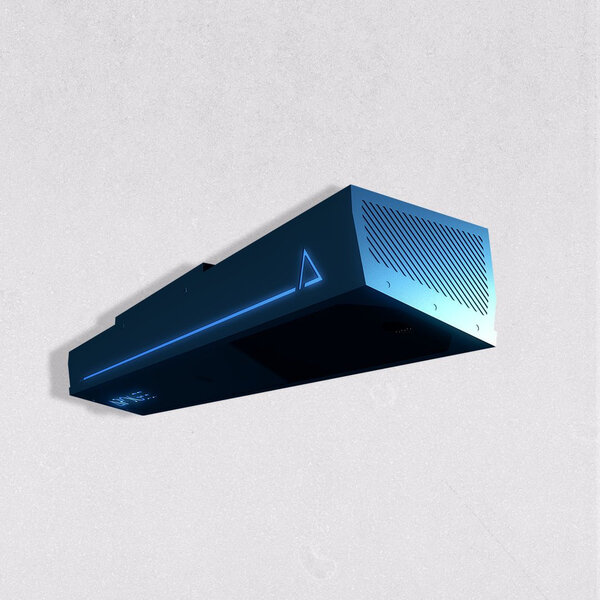
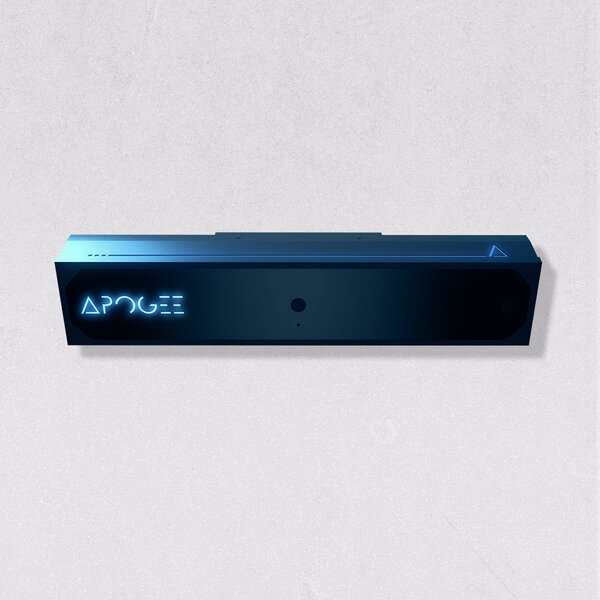
The TruGolf Apogee is the easiest overhead launch monitor to set up and use — voice commands, auto-calibration, no stickers, instant data. If your priority is zero-friction sim golf, nothing in the overhead category matches its ease of use. But at $7,995 with only 8 data metrics and E6-only software, it's a hard sell against the Uneekor EYE XO (same price, 3x the data, GSPro compatible) or the VTrack ($5,000, larger hitting zone, more metrics). The Apogee is for one specific buyer: the guy who wants overhead tracking without ever thinking about stickers, calibration, or software configuration. If that's you, this is the best overhead unit you can buy. If you care about data depth or GSPro, buy literally anything else in this category.
TruGolf TruGolf Apogee · $7,995
What We Love
- +Zero stickers, zero marked balls — swing any club, hit any ball, get instant data
- +Voice commands ('Hey Apogee, mulligan') with laser launchpad for effortless round flow
- +Instant Impact delivers truly zero delay — ball hits screen, data appears, sub-0.3 seconds
- +Auto-calibration with Apogee Intelligent Dashboard — set it once and forget it
- +Slow-motion Point of Impact video after every shot — genuinely useful for swing analysis
- +Seamless lefty/righty switching with no recalibration needed
- +Designed and manufactured in the USA
What Sucks
- −8 data metrics vs 26 from Uneekor EYE XO at the same price — thinnest data set in the overhead class by a wide margin
- −E6 Connect ONLY — no native GSPro support, no TGC 2019. Full course play requires $1,000 upgrade
- −At $7,995, it costs more than the VTrack ($5,000) and ProTee VX ($6,500) while delivering fewer features
- −9-foot minimum ceiling height eliminates many standard garages and basements
- −38-inch wide unit requires precise ceiling joist positioning — may not fit all layouts
- −18-month warranty is short for a $7,995 permanent-install product
The Easiest Overhead Launch Monitor You’ll Never Set Up
Overhead launch monitors have a problem. They’re incredibly capable — dual cameras, 20+ data points, stickerless tracking, massive hitting zones — but they’re also expensive, complicated to install, and require constant tinkering with software configuration.
TruGolf looked at that and went the other direction.
TruGolf built the Apogee around a simple bet: make it the easiest overhead launch monitor to own and use. For a certain kind of buyer, that’s the feature that matters most.
(That buyer is the guy who wants a simulator that works like an appliance. Walk in, swing, done. No calibration boards. No sticker checks. No “wait, did GSPro update and break my connector again?”)
But easy costs. The Apogee is $7,995. At that price, you’re buying in the same tier as the Uneekor EYE XO ($8,000), which delivers 26 data metrics, native GSPro support, and a proven ecosystem. You’re paying more than the VTrack ($5,000) with its 31x24-inch hitting zone and 23 data points. You’re paying more than the ProTee VX ($6,500) with its included swing cameras and 24 metrics.
What’s in the Box
The Apogee arrives as a single 38-inch wide unit that weighs 22 pounds. It’s bigger than any other overhead unit on the market — the EYE XO is 31 inches, the VTrack is smaller still. That width becomes important when you’re finding ceiling joists to mount it to.
Included:
- Apogee launch monitor unit
- Ceiling mount bracket and mounting hardware
- Calibration template
- Laser level
- CAT6 Ethernet cable (Wi-Fi is not recommended)
- Power supply
- Installation manual
- E6 Connect Practice license key (perpetual)
The mounting hardware is solid. Steel bracket, lag bolts, the works. TruGolf includes a laser level for alignment and a calibration template that walks you through the positioning. Installation takes about 30-45 minutes for someone comfortable with a stud finder and a drill.
The one thing you don’t get is a PC. Bring your own Windows machine with at least an Intel i5, 8GB RAM, and an Nvidia 1070. (Note: Windows only. Mac users, stop reading here.)
The Simplicity Pitch
The Apogee’s entire value proposition fits into three words: it just works.
No stickers, ever. The Instant Impact vision algorithms read ball data by tracking the ball’s dimple patterns. Spin, launch, speed — all measured without marking the ball. Club data works the same way. The cameras track club head speed, face angle, and club path optically. In certain lighting conditions with certain custom club finishes, you might need a small reflective sticker on the club face for precise face angle data. But in normal conditions, you grab any club, hit any ball, and get data. That’s a genuine quality-of-life improvement over the Uneekor system, which needs reflective stickers on the club face for club data.
Voice commands. This sounds gimmicky until you use it. “Hey Apogee, mulligan.” “Hey Apogee, next club.” “Hey Apogee, replay shot.” You can run a full sim round without touching a mouse or keyboard. For solo practice sessions, this is genuinely useful. For sim nights with buddies, it’s the difference between “hold on, let me click… sorry, guys” and seamless flow.
Laser Launchpad. The unit projects a laser-defined 8x10-inch box onto your hitting mat showing exactly where to place the ball. It’s hard to describe how much this reduces frustration until you’ve used an overhead unit without it. Instead of guessing whether you’re in the hitting zone, you put the ball in the glowing box and swing. It switches off automatically once it locks onto the ball.
Auto-calibration. The Apogee Intelligent Dashboard (ACC) handles ongoing calibration automatically. The unit checks its alignment and adjusts for ambient light changes every time it boots up. You don’t do anything. It just works.
Instant Impact. The data processing is genuinely fast. Sub-0.3 seconds from strike to on-screen display. You hit the ball, you see the result. No lag, no staring at a loading indicator. For the speed, it uses an onboard processor — the PC doesn’t handle any of the camera processing. This matters because it means the Apogee doesn’t need a high-end gaming PC to deliver fast response times.
And after every shot, you get a slow-motion Point of Impact replay. The unit captures club-ball impact from above in slow motion, showing you exactly what happened at contact. You can scrub through it, play it back, compare it to previous shots. For swing nerds, this alone is worth considering.
The Data Problem
The Apogee measures eight things:
Ball: Ball speed, back spin, side spin, vertical launch angle, horizontal launch direction Club: Club head speed, club face angle, club path
With reflective stickers on the club face, you can add dynamic loft and dynamic lie. That brings it to ten.
Ten data points. The Uneekor EYE XO measures 26. The ProTee VX measures 24. The VTrack measures 23. The Apogee measures 8.
Eight data points against 24-26 from competitors at the same price is a genuine category difference, not a “well, most people don’t need all those metrics” gap. Without stickers, you get the essentials — ball speed, launch, spin, club speed, face angle, and path. That covers sim play. Attack angle, spin axis, smash factor, and impact location require the reflective stickers on the club face.
For sim play — hitting virtual courses, playing rounds, competing with friends — 8 metrics is enough. The ball data feeds the flight engine, the club data gives you basic swing feedback. You can play a complete round of golf without ever feeling like you’re missing something.
For practice and improvement, 8 metrics is limiting. If you’re trying to fix your attack angle, understand your spin axis, or see where you’re striking the ball on the face, the Apogee either gives you estimated data (at best) or nothing. The EYE XO at the same price gives you all of that plus club face impact location, dynamic lie, and more.
TruGolf built the Apogee for sim play, not sim practice.
The Software Reality
The Apogee ships with E6 Connect Practice. That’s a perpetual license for the practice range mode — driving range, skill challenges, shot replay, performance analytics. No monthly fees for your basic data.
If you want to play courses, you need the $1,000 E6 Connect full upgrade. That unlocks 90+ courses, 4K visuals, multiplayer, and live stat tracking. One-time payment, not a subscription.
The important limitation: The Apogee does NOT support GSPro natively. At all. This is not a “you need a third-party connector that costs extra” situation — it’s a fundamental software incompatibility. The Apogee only works with E6 Connect.
If you’re a GSPro user — and if you’re in the overhead category, there’s a good chance you are — this is a dealbreaker. GSPro has the best physics, the largest course library, the most active development community, and the deepest integration with home sim hardware. Not having it at this price point is a significant limitation.
E6 Connect is fine. It’s polished, it has good courses, and TruGolf’s version integrates well with the hardware. But it’s not GSPro. And at $7,995, “not GSPro” is a hard ask.
Installation Reality
The Apogee needs a 9-foot minimum ceiling height. Ten feet is ideal. If you have 8-foot garage ceilings, this unit doesn’t work for you.
It mounts 21-25 inches in front of the tee position. The unit itself is 38 inches wide, which means you need enough ceiling joist space to mount a 38-inch bracket. In a standard garage with 16-inch joist spacing, this works fine — you mount across two joists. In tighter layouts or finished ceilings, the 38-inch width can be a problem.
TruGolf recommends a room that’s 10-12 feet wide and 16-18 feet deep. That’s consistent with what most overhead units need. It’s more about the ceiling height than the overall room size.
The mounting kit is solid — steel bracket, proper lag bolts, laser level included. First-time installation from unboxing to first swing is about 30-45 minutes. Once it’s up and calibrated, it stays calibrated. The ACC handles automatic recalibration for ambient light changes.
How It Competes
The overhead launch monitor market in 2026 has more options than ever:
| System | Price | Data Points | Software | Stickers? | Key Differentiator |
|---|---|---|---|---|---|
| TruGolf Apogee | $7,995 | 8 (10 with stickers) | E6 only | No (mostly) | Voice commands, laser pad, auto-cal |
| Uneekor EYE XO | $8,000 | 26 | GSPro + E6 | Club stickers | Most data, proven ecosystem |
| ProTee VX | $6,500 | 24 | GSPro + TGC + E6 | No | Best value, swing cams included |
| VTrack | $5,000 | 23 | GSPro + E6 | No | Largest hitting zone, lowest price |
| Foresight Falcon | $15,999 | 30+ | FSX Play + GSPro | No | Pro-level, huge hitting zone |
The Apogee lands in an uncomfortable spot. It’s the same price as the EYE XO but delivers a third of the data. It costs $1,500 more than the ProTee VX but has fewer features. It costs $3,000 more than the VTrack with less data and a smaller hitting zone.
Ease of use is where the Apogee beats every other overhead unit. You get voice commands, a laser launchpad, auto-calibration, and tracking that doesn’t need stickers. Data appears instantly. The Apogee is the closest thing to an overhead launch monitor that works like an iPad — turn it on, and it just goes.
The question is whether that ease of use is worth the premium. For the guy who wants to play sim golf without ever thinking about his launch monitor, yes. For the guy who wants data depth, GSPro, or any kind of swing analysis tool, no.
Use marked balls for best results. See our best golf balls for simulator guide →
Who Should Buy the TruGolf Apogee
Buy it if:
- You want ceiling-mounted overhead tracking with zero daily friction
- You never want to think about stickers, calibration boards, or marked balls
- Voice commands and laser ball placement sound like features you’d actually use
- You’re already in the E6 Connect ecosystem or don’t care about GSPro
- You want the fastest, simplest path from walking into your sim room to hitting balls
- You’re building a commercial facility where ease of use matters more than data depth
Don’t buy it if:
- You care about data depth — 8 metrics is genuinely limiting for any kind of swing improvement work
- You use GSPro or want to use GSPro (the Apogee doesn’t support it)
- You’re on a budget — the VTrack ($5,000) and ProTee VX ($6,500) offer more for less
- You have 8-foot ceilings (this unit needs 9 feet minimum)
- You want portability (this is ceiling-mounted, it’s not going anywhere)
- You want the most data for your dollar (the EYE XO at the same price delivers 3x more)
The Final Verdict
The TruGolf Apogee is the easiest overhead launch monitor you can buy in 2026. Voice commands, laser ball placement, auto-calibration, zero stickers, instant data — it’s the closest thing to “it just works” in the overhead category.
But easy has a price. At $7,995 with 8 data metrics and E6-only software, the Apogee asks you to pay a significant premium for simplicity. The Uneekor EYE XO costs the same and delivers three times the data with GSPro compatibility. The VTrack costs $3,000 less and has a larger hitting zone with more metrics. The ProTee VX costs $1,500 less and includes swing cameras.
The Apogee makes sense for one specific buyer: the guy who wants overhead tracking without ever thinking about his launch monitor. The guy who doesn’t want to calibrate, doesn’t want to check stickers, doesn’t want to troubleshoot GSPro connectors, doesn’t want to do anything except walk into his sim room and swing. If that’s you, this is the best overhead unit you can buy.
For everyone else — and that’s most people — one of the other options will serve you better.
The overhead market is deeper than ever. See our Best Overhead Launch Monitors (2026) guide for the full ranking, plus deep dives on the Uneekor EYE XO, ProTee VX, and VTrack. Also check our Overhead vs Floor Launch Monitor guide to see whether ceiling-mounting is right for your space, and the Best Launch Monitors 2026 roundup for all options.
Buy the TruGolf Apogee at Rain or Shine Golf — $7,500 with free shipping and 0% financing available. Or check TruGolf’s official store for current pricing and bundle deals.
Need the right balls for the TruGolf Apogee? → Check our Best Golf Balls for Simulator guide (your camera unit works with any premium ball)