VTrack Overhead Launch Monitor
The $5,000 Overhead Unit That Changes Everything
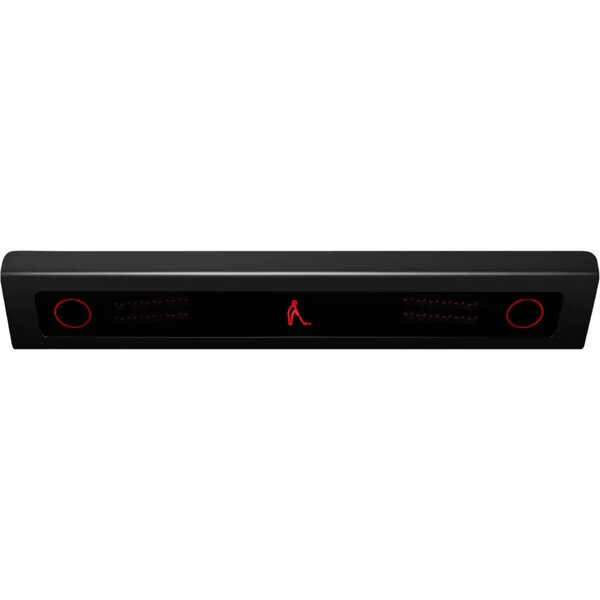
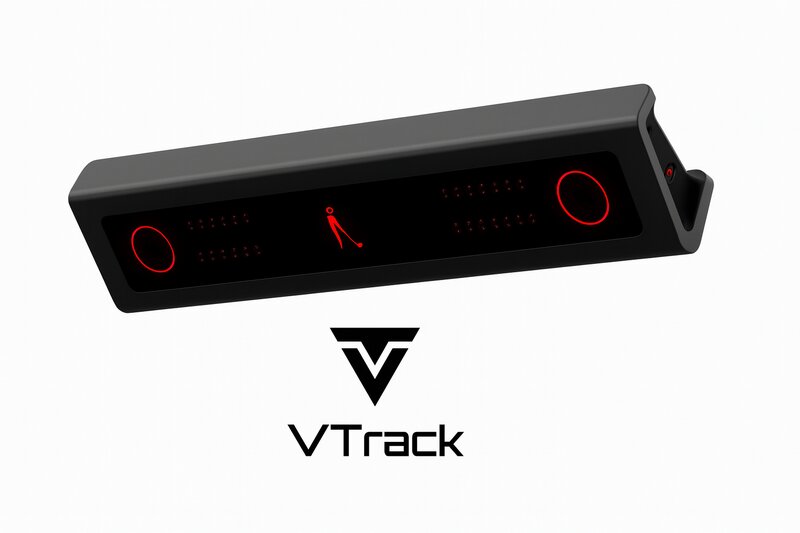
The VTrack is the best value in overhead launch monitors, and it's not exactly close. For $5,000 you get the largest hitting zone in the category (31" × 24"), dual 1,800 FPS cameras, markerless tracking, no subscription, and full GSPro support. It undercuts the ProTee VX by $1,500, the Uneekor EYE XO by $4,000, and the TrackMan iO by $9,000 — while delivering a bigger hitting zone than all of them. The smaller US community and basic included software are real tradeoffs, but for the guy who wants the most overhead tracking for the least money, this is the unit to beat.
Laon Swingcraft VTrack Overhead Launch Monitor · $5,000
What We Love
- +31" × 24" hitting zone — the largest in the entire overhead class, period
- +No subscription fees — zero. Not for core tracking, not for GSPro, not ever.
- +Markerless tracking: no stickers, no marked balls, no calibration board nonsense
- +Dual 1,800 FPS cameras with slow-motion impact video built in
- +23+ data points with both ball and club data, measured not estimated
- +20,000+ units sold in Korea with real owner reports backing the accuracy claims
What Sucks
- −106" (8'10") minimum ceiling height — still eliminates some garages and basements
- −Included dashboard software is basic compared to Uneekor or ProTee's native offerings
- −Smaller US community means fewer troubleshooting threads and YouTube walkthroughs
- −Backorder delays at some retailers — demand is outpacing supply
- −Laon Swingcraft is new to US market — brand trust takes time to build
Overhead launch monitors have a specific job: sit on your ceiling, track the ball with cameras, and never require you to think about them again.
They should also be invisible. No unit on the floor. No tripod in the way. No cables running across the hitting area. Just a clean, unobstructed setup where you walk in, hit balls, and leave.
The problem has always been the price. The cheapest overhead option has been the ProTee VX at $6,500. Then the Uneekor EYE XO at $9,000. Then you jump to $11-14K for the premium stuff. The overhead category has been a “how much can you afford” game, not a “what’s the best value” game.
Then the VTrack arrived from South Korea with a $5,000 price tag, a 31-by-24-inch hitting zone (bigger than every competitor), dual 1,800 FPS cameras, and no subscription of any kind.
I’ve spent the last few days digging into every owner report, every comparison, and every review I could find from people who’ve actually been hitting balls on this thing for months.
The $5,000 That Beats $9,000 Systems
| System | Price | Hitting Zone | Subscription | Cameras | FPS |
|---|---|---|---|---|---|
| VTrack | $5,000 | 31“ × 24“ | $0 | Dual | 1,800 |
| ProTee VX | $6,500 | 25“ × 21“ | $0 | Dual | 1,200 |
| Uneekor EYE XO | $9,000 | 13.7“ × 11.8“ | $199/yr | Dual | 1,000 |
| Uneekor EYE XO2 | ~$10K | 28“ × 21“ | $199/yr | Quad | Higher |
| TrackMan iO | ~$14K | ~16“ × 12“ | Varies | Radar+Camera | N/A |
The VTrack is cheaper, larger, and faster-framerate than every direct competitor.
The hitting zone is the headline. 31 inches by 24 inches. That’s more than double the area of the Uneekor EYE XO and significantly larger than the ProTee VX. What that means in practice: you don’t aim. You just drop the ball somewhere in that giant rectangle and swing. Left side, right side, middle, back, forward — doesn’t matter. The cameras see it.
For a home simulator where consistency of setup is the whole point, this is a real quality-of-life upgrade. You stop thinking about where the ball is and start thinking about the swing.
How the Tech Works
The VTrack uses dual stereoscopic cameras that capture at 1,800 frames per second. That’s 50% faster than the ProTee VX’s 1,200 FPS and 80% faster than the Uneekor EYE XO’s 1,000 FPS.
Higher frame rate means more images of the ball and club during the critical milliseconds around impact. More images = more data points = more accurate spin measurement. Simple physics.
It’s a camera+IR hybrid system. The cameras track dimple patterns on the ball (so no stickers, no marked balls, no special equipment — use any ball you want), and infrared sensors track the club through the hitting zone.
23+ data points measured directly:
- Ball data: Ball speed, launch angle, launch direction, back spin, side spin, spin axis, total spin
- Club data: Club speed, club path, face angle, face to path, attack angle, dynamic loft, lie angle, impact point (vertical + horizontal)
- Performance data: Carry distance, total distance, peak height, descent angle, offline, flight time
Everything is measured. Nothing is estimated. The impact location data (showing exactly where on the clubface you struck the ball) is particularly valuable and something most sub-$6K systems don’t offer at all.
Response time is 200-250 milliseconds from strike to data on screen. That’s faster than the ProTee VX and significantly faster than any ground-based camera system under $3K. You hit the ball and the numbers are there before you’ve finished your follow-through.
The Biggest Hitting Zone in Overhead
This deserves its own section because it’s the VTrack’s superpower.
31 inches by 24 inches. That’s 744 square inches of active tracking area.
For context:
- Uneekor EYE XO: 162 sq in (13.7“ × 11.8“)
- ProTee VX: 525 sq in (25“ × 21“)
- Uneekor EYE XO2: 588 sq in (28“ × 21“)
- VTrack: 744 sq in (31“ × 24“)
You can place the ball anywhere in that space — left side for a draw setup, right side for a fade, front of the stance for a driver, back of the stance for a wedge. The cameras find it instantly.
And because it’s ceiling-mounted, switching between right-handed and left-handed golfers is instantaneous. No recalibration. No moving the unit. No re-configuration. If you share your sim with a lefty friend or a kid who wants to try swinging from the other side, this is a massive convenience.
No Subscription. Read That Again: No Subscription.
I’ll say this plainly because the launch monitor industry has trained us to look for the hidden annual fee.
The VTrack has zero required subscription fees. Not for core tracking. Not for ball data. Not for club data. Not for GSPro compatibility. Not ever.
You buy the unit for $5,000. You connect it to your PC. You open GSPro or E6 Connect. You play.
Compare that to Uneekor where you pay $199/year just to use GSPro with your $9,000 EYE XO. Or the GC3 where you’re spending $1,995 for the lifetime FSX Play license. Or TrackMan where you’re in the ecosystem whether you like it or not.
The VTrack says “here’s the hardware, go play.” That’s refreshing.
The only costs are the simulator software you choose. GSPro is $250/year. E6 Connect is $200-600/year depending on the tier. Those are software costs, not hardware lock-in. If you decide you want different software next year, you can. VTrack doesn’t hold your data hostage.
Software: GSPro Works Natively
The VTrack is compatible with GSPro, E6 Connect, and E6 Apex out of the box. The GSPro connection is native — no subscription fee, no connector, no extra hardware.
The included VTrack Dashboard is functional but basic. It shows your data, replays swing video, and lets you track sessions. It does the job. But it’s not as polished as ProTee Labs or Uneekor’s Refine software. (ProTee’s planned GolfCore upgrade — promising Unreal Engine 5 graphics — has been delayed, so don’t hold your breath there.) It’s a practice dashboard, not a full training ecosystem.
Most owners report just using GSPro as their primary interface and only opening the dashboard for detailed data review. That’s what I’d do too.
The software update situation is encouraging. Laon Swingcraft has been shipping firmware updates every 4-6 weeks based on user feedback. They added slow-motion impact video in an early 2026 update and have an AI swing analyzer scheduled. The company comes from a machine vision and AI background (they’ve been doing this since 2010), so the software roadmap has real credibility.
Installation: What You Need to Know
The VTrack requires a minimum ceiling height of 106 inches (8 feet 10 inches). That’s lower than the ProTee VX’s 9-foot minimum and about the same as most Uneekor overhead units.
If you have standard 8-foot ceilings, this still won’t work. Sorry. You need that extra 10 inches.
Installation involves mounting the unit to ceiling joists (18-pound unit, don’t use drywall anchors). You’ll need a stud finder, drill, mounting hardware (included), and about 2-3 hours for a first-time install. The unit is 28 inches long and mounts about 40 inches in front of the hitting area.
Once it’s mounted and calibrated, it stays calibrated. Owners report zero drift after the initial setup. The calibration process takes about 15 minutes using the included calibration plate.
Accuracy: What Real Owners Say
The VTrack has sold 20,000+ units in South Korea and is now hitting the US market through retailers like Golf Bays USA, Elite Sim Golf, and Golf Simulators Direct. The US launch is early, but the Korean market data is substantial.
I found owner reports comparing VTrack data against Uneekor EYE XO and GC3 units. The consensus:
- Ball speed: Within 0.5-1 mph of reference
- Spin rates: Within 100-200 RPM — reliable on wedge shots where radar struggles
- Club data: Face angle and club path are consistent and repeatable
- Carry distance: Matches GC3 within 1-2 yards on most shots
The camera-based spin tracking is the standout. Because the VTrack reads dimple patterns directly (no stickers), spin is measured from the ball’s actual rotation, not estimated from launch conditions. This matters most for wedge shots, partial swings, and shots with high spin rates where radar-based systems tend to guess.
One owner on Golf Simulators Direct wrote: “Accuracy is on par with my buddy’s Uneekor (we compared). The no-subscription model sealed the deal — I’m saving $500+/year compared to other options. GSPro integration was seamless. For under $5K, this is a no-brainer.”
Another owner who chose the VTrack over the ProTee VX: “What tipped me toward VTrack: the reading area is noticeably larger (24x30”), and at under $5K, the VTrack came in about $1,500 cheaper than the ProTee. Both have no subscription fees, which was non-negotiable for me. Three months in with mine, the club data matches what I was seeing on my friend’s GC3.“
Who Should Buy the VTrack
Buy it if:
- You have 8’10“ or higher ceilings and want a clean overhead installation
- You want the largest hitting zone available in any overhead system
- You refuse to pay subscription fees on principle (and I don’t blame you)
- You want markerless tracking — no stickers, no marked balls, no calibration board — see our full stickerless launch monitors roundup
- You’re building a dedicated simulator and want the best value in overhead
- You share your sim with lefty/righty friends or family
Don’t buy it if:
- You have 8-foot ceilings (you need ground-based: Eye Mini, GC3, SkyTrak+)
- You’re in the premier-high-end tier and want the largest software ecosystem (Uneekor is more established)
- You want a polished native training dashboard with AI coaching (ProTee Labs is better here)
- You need immediate availability from every retailer (some are on backorder)
- You want the “everyone knows this brand” confidence of Uneekor or Foresight
Use marked balls for best results. See our best golf balls for simulator guide →
The Competition
| System | Price | Hit Zone | Sub | Ceiling Min | FPS |
|---|---|---|---|---|---|
| VTrack | $5,000 | 31“ × 24“ | $0 | 8’10“ | 1,800 |
| ProTee VX | $6,500 | 25“ × 21“ | $0 | 9’0“ | 1,200 |
| Uneekor EYE XO | $9,000 | 13.7“ × 11.8“ | $199/yr | 8’10“ | 1,000 |
| Uneekor EYE XO2 | ~$10K | 28“ × 21“ | $199/yr | 8’10“ | Higher |
The VTrack’s value proposition is right there. You save $1,500 vs the ProTee VX and get a larger hitting zone and faster cameras. You save $4,000 vs the EYE XO and get a hitting zone that’s more than double the size with no subscription.
The trade-off is brand maturity. Uneekor has been in the US market for years with a massive community, thousands of troubleshooting threads, and broad retailer support. Laon Swingcraft is new here. The VTrack has proven itself in Korea with 20,000+ units, but the US support infrastructure is still building.
The Final Verdict
The VTrack is the best value in overhead launch monitors, and I don’t think it’s close.
$5,000 gets you a ceiling-mounted, dual-camera, 1,800 FPS system with a 31-by-24-inch hitting zone and zero subscription fees. The ProTee VX costs $1,500 more with a smaller zone and slower cameras. The Uneekor EYE XO costs $4,000 more with a fraction of the hitting area and an annual subscription.
Laon Swingcraft has been in the machine vision business since 2010. They’ve shipped 20,000+ units in Korea. The technology is proven. The firmware is getting better every month. The GSPro integration is seamless.
The US community is small right now, and the included dashboard software is basic. Those are real concerns. But for the price, the capability, and the largest hitting zone in the entire overhead class?
This is the unit I’d buy if I were building an overhead simulator today.
Check VTrack availability at Golf Bays USA — $5,000, in stock, free next-day shipping. Also available at Elite Sim Golf and Golf Simulators Direct.
Compare overhead LMs: Best Overhead Launch Monitors (2026) → — full roundup · 7 Overhead LMs Compared: Specs, Hitting Zones & Prices · VTrack vs ProTee VX → · ProTee VX Review → · Uneekor EYE XO Review → · Best Launch Monitors 2026 · Best camera launch monitors 2026 →
Make sure your ceiling is at least 8’10“ and you’ve got a PC for GSPro. Then buy it. The largest hitting zone in overhead tracking at the lowest price — that combination doesn’t come around often.
Need the right balls for the VTrack? → Check our Best Golf Balls for Simulator guide (your camera unit works with any premium ball)
Head-to-Head Comparisons
Want to see how the VTrack Overhead Launch Monitor stacks up against the competition?