GolfJoy Spica 3
Triple Cameras at $3,199 — Is This the Real GC3 Killer?
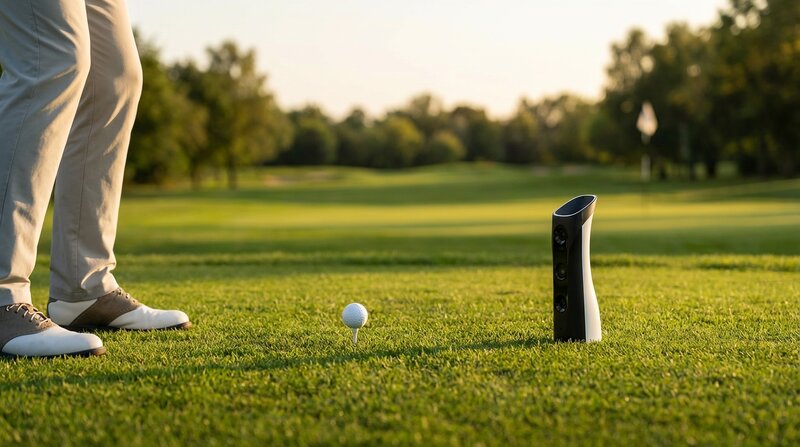
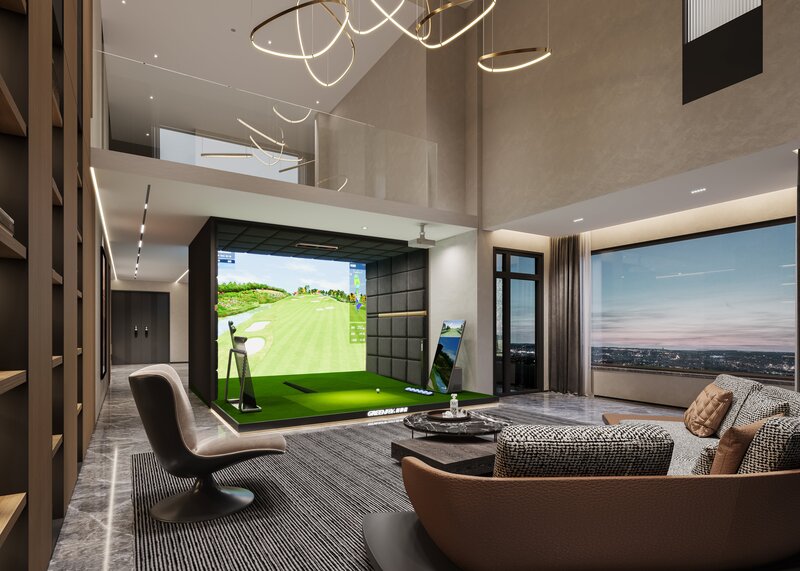
The GolfJoy Spica 3 is the most compelling value proposition in the $3,000-$4,000 launch monitor category. Triple cameras, 27 data points, built-in touchscreen, 6.5-hour battery, native GSPro — these are not budget-tier specs at any price. At $3,199, they're bordering on absurd. The catch is that GolfJoy is still earning its reputation in the US market, and independent accuracy verification is thinner than most buyers would like. But MyGolfSpy's Best of Show endorsement carries real weight. If you're deciding between the GC3 at $5,249 or the BLP at $2,499 with a $499/yr subscription, the Spica 3 is the third option that makes you question both of those choices.
GolfJoy GolfJoy Spica 3 · $3,199
What We Love
- +Triple high-speed cameras at $3,199 — unprecedented price for this hardware
- +27 data points (23 ball/trajectory + 4 club) — more metrics than the GC3 at half the price
- +Built-in touchscreen display — see data without phone or tablet
- +6.5-hour battery — take it to the range, the sim, the backyard
- +Native GSPro, E6 Connect, and Creative Golf support — no extra licenses needed
- +9-axis stabilization system works on uneven surfaces outdoors
- +MyGolfSpy Best of Show at 2026 PGA Show
- +Works with any ball — no special marked balls required
What Sucks
- −Club data requires stickers on clubface (same as GC3, BLP, Eye Mini)
- −GolfJoy is not a household name in launch monitors — brand trust is earned, not given
- −Optional subscription ($249-$799/yr) unlocks full GolfJoy PC software features
- −Limited independent accuracy testing available — MyGolfSpy's quote was PGA Show demo, not a controlled test
- −Not available on Amazon — must buy direct from GolfJoy or GolfJoy America
- −6.6 lbs is portable but not ultra-light — heavier than R10 or MLM2Pro
Three cameras. $3,199. MyGolfSpy says 99% of GCQuad accuracy.
That’s not a typo. Those three facts are the entire reason you’re reading this review, and they’re the entire reason the GolfJoy Spica 3 is the most disruptive launch monitor to hit the $3K price bracket since the Bushnell Launch Pro.
The sub-$5K launch monitor space has followed the same pattern for years: camera units cost $4,500-$7,000, radar units cost $200-$2,000, and there’s a no-man’s-land in the middle where you have to choose between accuracy and affordability. The Spica 3 doesn’t just bridge that gap — it acts like the gap never existed.
What Is the GolfJoy Spica 3?
The Spica 3 is a portable photometric launch monitor with three high-speed cameras, AI-driven processing, and a built-in touchscreen display. It launches on your ball data, club data, and trajectory data — 27 data points in total — without needing a phone, tablet, or PC to see the basic numbers.
It costs $3,199. No mandatory subscription. No unlock tiers. You get full ball and club data out of the box, forever.
The closest competitors at this price point are:
- Foresight GC3 ($5,249) — three cameras, no subscription, 11 data points
- Uneekor Eye Mini ($4,500 + $199/yr Pro) — dual cameras, subscription required for 3rd-party software
- Bushnell Launch Pro ($2,499 + $499/yr) — single-camera photometric, subscription required for club data
- FlightScope Mevo Gen2 ($2,195) — three-Doppler radar, estimated spin indoors
| Notice the pattern. The Spica 3 has more cameras than any of them, more data points than any of them, a built-in touchscreen none of them have, a 6.5-hour battery none of them offer, and a price that undercuts all but the BLP (which requires a subscription to function fully).
The head-to-head with the GC3 is the one everyone asks about — see our full Spica 3 vs GC3 comparison →
On paper, it’s not close. The question is whether the paper matches reality.
The 27 Data Points — What You Actually Get
“27 data points” needs unpacking, because manufacturers love inflating this number.
Ball data: Ball speed, launch angle, vertical spin rate, side spin, spin axis, launch direction, back spin, side spin ratio, carry efficiency
Club data: Club speed, club path, smash factor, attack angle, impact efficiency
Trajectory data: Total distance, carry distance, roll distance, carry percentage, curve, hang time, ball trajectory, apex height, descent angle, landing angle, lateral deviation, offline distance, flight time
That’s 27. All measured, not calculated. The club data requires stickers on your clubface (the included fiducial markers), which is the same as the GC3, BLP, and Eye Mini. If you don’t want stickers, you’ll lose club path, attack angle, and impact efficiency — but you still get ball speed, club speed, and smash factor from the camera system alone.
The hitting zone is 250mm x 250mm (about 10“ x 10“). That’s wider than the GC3’s 7“ x 10“ zone and comparable to the Eye Mini’s area. You don’t need to be a Tour player to hit inside it, but you do need to be set up correctly.
Accuracy: The MyGolfSpy Question
MyGolfSpy called it “99 percent of the accuracy of a Foresight GC Quad.”
MyGolfSpy’s Best of Show awards at the 2026 PGA Show were based on hands-on demos at the convention center. Their team spent time with the Spica 3, hit balls, compared data, and came away impressed enough to put it at the top of their list. Connor Lindeman wrote: “The market is ready for a major shift and someone is going to sell a boatload of launch monitors if they can figure out the sub-$5K personal launch monitor space.”
That’s not a controlled laboratory test. It’s a trade show demo by the most respected independent equipment reviewers in golf. It carries weight — MyGolfSpy doesn’t hand out Best of Show awards to products that don’t deliver — but it’s not the same as a full Most Wanted test with 12 units, 1,000 shots, and statistical analysis.
What I can tell you is this: the hardware is right. Three high-speed cameras with synchronized LED lighting, running at a claimed 3,000+ fps, measuring ball and club at impact. This is the same fundamental technology that makes the GCQuad and GC3 accurate. The physics of photometric tracking doesn’t care about brand — if the cameras are fast enough and the processing is good enough, the data is accurate.
The open question is whether GolfJoy’s AI processing, calibration routine, and firmware deliver on the hardware’s potential. That’s a question only time and independent testing will answer.
What’s in the Spica 3’s favor: it’s the official launch monitor of the Notah Begay III Junior Golf National Championship and NXXT Golf, and it’s used by the David Fritz Golf Academy in Ontario. Those are real institutions making real buying decisions. They wouldn’t use it if the data was unreliable.
The Built-In Touchscreen
This is the feature nobody at this price has, and it matters more than I expected.
The Spica 3 has a responsive backlit LCD touchscreen on the unit itself. You can see ball speed, launch angle, spin rate, and carry distance instantly without pulling out your phone, connecting Bluetooth, or opening an app. You just look at the device.
This doesn’t sound like a big deal until you’re at the range and your phone is in your bag, or your tablet is across the room, or — and it happens — you finish a session and realize you forgot to hit “save.” The touchscreen means the data is right there, always, on the device that collected it.
It also means you can change settings, switch modes, and adjust calibration without a second screen. For a portable unit that’s supposed to work indoors and outdoors, this is the difference between “I’ll use this at the range” and “I actually use this at the range.”
Battery Life: 6.5 Hours of Real Use
The Spica 3 has a 12,800 mAh battery rated for 6-7.5 hours of continuous use. That’s a full range session plus a simulator session without plugging in.
For context: the GC3 has no battery at all — you plug it in. The BLP has no battery. The Eye Mini has a battery but no one’s pushing it past 3-4 hours of real use. The Mevo Gen2 gets about 5 hours. The Spica 3’s battery is the best in its class by a meaningful margin.
It takes about 4 hours to charge fully, which means overnight charging covers you for the next day’s session. If you’re the kind of person who wants one launch monitor for the garage, the range, and the occasional backyard session — the battery makes that lifestyle work.
Software: The Optional Subscription Question
This is where it gets complicated.
The Spica 3 ships with a 3-month full-access trial of GolfJoy PC software. After the trial, you get lifetime access to full data metrics, one driving range, and one premium golf course at no charge through the GolfJoy Pro mobile app. That’s not nothing — you can still practice, see your data, and play one course forever.
But the full GolfJoy PC software — the Unreal Engine 5 simulator with 200+ courses in 4K — requires an optional subscription:
- Professional tier: $249/year
- Diamond tier: $799/year
This is where the Spica 3 differs from the GC3 (which includes FSX Play with 25 courses permanently) and aligns more with the BLP model (hardware is affordable, software is the ongoing cost).
The good news: GSPro, E6 Connect, and Creative Golf all work natively. You pay for those separately, but you’re not locked into GolfJoy’s ecosystem. If you already have a GSPro license at $250/year, you can use the Spica 3 with it directly — no bridge app, no extra license, no hassle.
Golfjoy recently announced a native GSPro integration partnership — making the Spica 3’s GSPro support first-party and official, no third-party connectors needed. Read about the partnership →
So the real answer to “what does this cost long-term” is:
- Free path: $3,199 + GSPro $250/yr = $3,449 first year, $250/yr after
- GolfJoy path: $3,199 + Diamond $799/yr = $3,998 first year, $799/yr after
- Spend $0 on software: Use the free GolfJoy Pro app with 1 course forever
That first option — $3,199 + GSPro at $250/yr — is the same annual cost as the BLP’s basic subscription ($249/yr) for dramatically more hardware. And it’s half the upfront cost of the GC3.
9-Axis Stabilization and Outdoor Use
The Spica 3 has a 9-axis gyroscope and stabilization system that keeps it accurate on uneven surfaces. This matters more than you’d think.
Camera-based launch monitors are sensitive to alignment. If the unit isn’t level, your launch angle and spin axis data drift. The 9-axis system compensates for the surface automatically, so you can set it up on a range mat, on grass, or on a slightly uneven garage floor without manually leveling it.
This is the feature that makes the Spica 3 genuinely portable. Most camera units (GC3, Eye Mini, BLP) work outdoors but need a level surface. The Spica 3 works on surfaces that aren’t level. That’s the difference between “outdoor compatible” and “I’ll actually take this to the range.”
Portability: Realistic, Not Ultra-Light
At 6.61 lbs and roughly the size of a shoebox (6.42“ x 3.90“ x 13.39“), the Spica 3 is portable but not pocket-sized. It comes with a backpack-style carrying case. You can carry it to the range, move it between rooms, or pack it for a trip — but it’s not living in your golf bag.
Compare that to the Garmin R10 (4 oz, lives in the bag) or the SC4 Pro (under a pound, pocket-sized). The Spica 3 is in a different category — portable in the same way a laptop is portable, not in the same way a phone is portable.
The tradeoff is that the Spica 3 has three cameras, a touchscreen, and a 12,800 mAh battery all in one package. The weight comes from the capability. If you want a true pocket unit, look at the R10 or SC4 Pro. If you want a unit you can carry from the garage to the range that delivers camera-grade accuracy, the Spica 3 is sized about right.
Who Should Buy the Spica 3
You’re the buyer if:
- You’re comparing the GC3 ($5,249) and wishing it was cheaper
- You want camera accuracy without paying camera-tier prices
- You want one launch monitor for your sim AND the range
- The BLP’s subscription model bothers you (it should)
- A built-in touchscreen sounds like “obvious actually” and you’re annoyed no one else does it
- You trust MyGolfSpy’s recommendation enough to take the leap on a newer brand
You should pass if:
- You need the absolute most accurate launch monitor under $10,000 — buy the GC3
- You want a household name with US-based support — buy the GC3 or BLP
- You don’t want to think about software subscriptions at all — buy the GC3 (no sub, FSX Play included)
- You’re on a strict $2,000 budget — look at SkyTrak+ or Square Omni
- You only care about sim play and never take your LM to the range — the BLP or Eye Mini Lite is cheaper and sim-focused
Use marked balls for best results. See our best golf balls for simulator guide →
How It Stacks Up
| Product | Price | Tech | Data Points | Touchscreen | Battery | GSPro Support | Subscription Need |
|---|---|---|---|---|---|---|---|
| GolfJoy Spica 3 | $3,199 | Triple camera | 27 | Yes | 6.5 hrs | Native, free | Optional ($249-$799/yr for GolfJoy SW) |
| Foresight GC3 | $5,249 | Triple camera | 11 | No | None | Need FSX license | No subscription |
| Uneekor Eye Mini | $4,500 | Dual camera | 15 | No | ~4 hrs | Need $199/yr Pro | $199/yr for 3rd party |
| Bushnell Launch Pro | $2,499 | Single camera | 8-14 | No | None | Need $499/yr Gold | |
| FlightScope Mevo Gen2 | $2,195 | 3-Doppler radar | 11 | No | 5 hrs | Via app |
See the full head-to-head: GolfJoy Spica 3 vs Foresight GC3 → — which $3K+ camera launch monitor is actually right for you.
The Bottom Line
The GolfJoy Spica 3 is the most interesting launch monitor at $3,199.
You get triple cameras, 27 data points, a built-in touchscreen, 6.5 hours of battery, native GSPro support, and a MyGolfSpy Best of Show award — all for $3,199 with no mandatory subscription.
The catch is that GolfJoy is still earning its reputation. This is not Foresight. It’s not Garmin. It’s a company from China that’s making aggressive moves into the US market, and the question — the only real question — is whether their quality control, firmware updates, and customer support match the hardware’s ambition.
The hardware specs say yes. MyGolfSpy’s endorsement says yes. The real-world adoption (NB3 Junior Championship, NXXT Golf, David Fritz Academy) says yes.
See every camera launch monitor ranked: Best camera launch monitors 2026 →
There’s no final yes or no here because the independent testing isn’t deep enough yet. But here’s what matters: if you’re shopping at $3,000-$4,000 and you haven’t looked at the Spica 3, you’re making a mistake. It might not be the right unit for you — the GC3 is still the benchmark for a reason — but you owe it to yourself to understand what $3,199 gets you in 2026.
Because the answer is: more hardware than any competitor at any price within $1,000 of it. And that’s not hype. That’s just the spec sheet.
See where the Spica 3 ranks: Best Launch Monitors 2026 → — the full roundup with every LM compared, featuring the Spica 3 as a top pick in the $3K bracket.
Need the right balls for the GolfJoy Spica 3? → Check our Best Golf Balls for Simulator guide (your camera unit works with any premium ball)
Head-to-Head Comparisons
Want to see how the GolfJoy Spica 3 stacks up against the competition?