GolfJoy GDS Pro
The $2,199 Dual Camera That Sits Between Budget and Premium
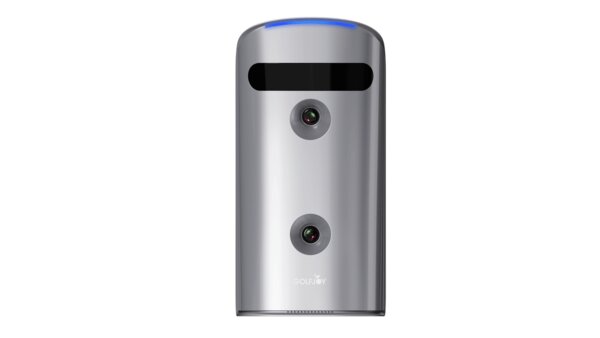
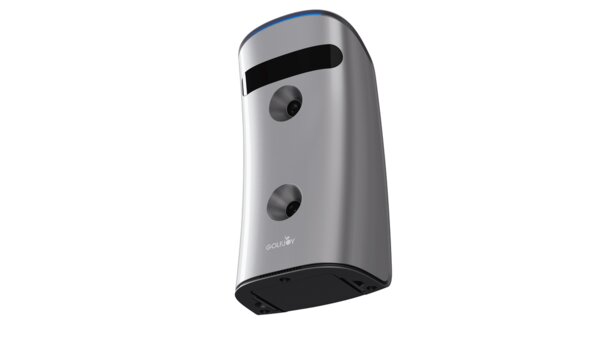
The GolfJoy GDS Pro is the cheapest dual-camera photometric launch monitor on the market, and it's not particularly close. At $2,199, you get 27 data points, portable design, native GSPro/E6 support, and the same GolfJoy software ecosystem as the $3,199 Spica 3. The tradeoffs are real — smaller hitting zone, no touchscreen, no Wi-Fi, slightly slower feedback — but the core metric set is identical. If you want camera accuracy without paying camera-tier prices and don't need the premium extras (touchscreen, Wi-Fi, max hitting zone), the GDS Pro is the best value in photometric launch monitors right now.
GolfJoy GolfJoy GDS Pro · $2,199
What We Love
- +Dual high-speed cameras at $2,199 — cheapest photometric launch monitor with full ball + club data
- +27 data points — same metric count as the Spica 3 ($3,199) and GC3 ($5,249)
- +3.3 lbs / 1.5 kg — genuinely portable, fits in a golf bag pocket
- +Removable battery with 4-5 hour life — swap packs for unlimited range sessions
- +Native GSPro, E6 Connect, and Creative Golf support — no bridge app needed
- +Built-in gyroscope for uneven outdoor surfaces
- +Works with any ball — no special marked balls required
What Sucks
- −Dual cameras (vs Spica 3's triple) — hitting zone is smaller (190x170mm vs 250x250mm)
- −No touchscreen — data requires phone/tablet/PC to see
- −No Wi-Fi — Bluetooth + Ethernet only (Spica 3 has Wi-Fi)
- −0.35s data latency vs Spica 3's 0.3s — small but noticeable in fast practice sessions
- −GolfJoy is still earning its US launch monitor reputation
- −Optional subscription ($249-$799/yr) for full GolfJoy PC sim software
Here’s something you don’t see every day: a $2,199 camera launch monitor with 27 data points, native GSPro support, and a removable battery that lasts four hours.
The GolfJoy GDS Pro is the company’s entry-level launch monitor. It sits below the Spica 3 ($3,199) in GolfJoy’s lineup, which means it’s the cheapest way to get into their photometric camera ecosystem. And when I say “cheapest,” I mean it in the literal sense — this is the most affordable dual-camera launch monitor on the market right now, full stop.
But cheap doesn’t mean stripped. The GDS Pro captures the same 27 data points as the Spica 3. It works with the same software (GSPro, E6, Creative Golf, GolfJoy’s own PC sim). It has the same gyroscope for outdoor use. It has the same any-ball capability. The tradeoffs are in the hardware, not the data set.
Let me walk through exactly what you get, what you lose, and whether $2,199 is the right price for your launch monitor decision.
What Is the GDS Pro?
The GDS Pro is a portable, floor-based launch monitor with two ultra-high-speed cameras. It sits next to the ball (like the Spica 3, GC3, and Bushnell Launch Pro) and captures ball and club data photometrically — meaning it takes high-speed photos of impact and measures what actually happened, rather than estimating from ball flight.
It costs $2,199. No mandatory subscription. You get full ball and club data out of the box, forever.
The closest competitors at this price point are:
- Bushnell Launch Pro ($2,499 + $499/yr Gold) — single-camera photometric, subscription required for club data and GSPro
- FlightScope Mevo Gen2 ($2,195) — three-Doppler radar, estimated spin indoors
- Garmin R50 ($4,499) — camera+radar hybrid, more expensive
- GolfJoy Spica 3 ($3,199) — triple camera, touchscreen, Wi-Fi, bigger hitting zone
See the pattern? The GDS Pro is the only unit at this price that gives you photometric camera accuracy (measured spin, not estimated) with full ball and club data, no mandatory subscription, and native sim software support. The BLP gets you camera accuracy but locks club data behind a $499/yr Gold tier. The Mevo Gen2 gets you radar with estimated spin indoors. The GDS Pro is the only one that does camera + no-subscription + full data at $2,199.
GDS Pro vs Spica 3: The Hardware Gap
The GDS Pro is often described as a “Spica 3 Lite,” and that’s accurate. Here’s the comparison:
| Spec | GDS Pro ($2,199) | Spica 3 ($3,199) |
|---|---|---|
| Cameras | 2 ultra-high-speed | 3 ultra-high-speed |
| Data Points | 27 | 27 |
| Touchscreen | ❌ No | ✅ Yes |
| Hitting Zone | 190H × 170W mm | 250 × 250 mm |
| Battery Life | 4-5 hours | 6.5-7.5 hours |
| Battery Type | Removable | Integrated |
| Weight | 1.5 kg (3.3 lbs) | 3.0 kg (6.6 lbs) |
| Data Latency | ≤0.35s | ≤0.3s |
| Wi-Fi | ❌ No | ✅ Yes |
| Bluetooth | ✅ Yes | ✅ Yes |
| Ethernet | ✅ Yes | ✅ Yes |
| Gyroscope | ✅ Yes | ✅ Yes |
| GPS | ❌ No | ✅ Yes |
| NFC | ❌ No | ✅ Yes |
| GSPro Support | ✅ Native | ✅ Native |
| E6 Support | ✅ Yes | ✅ Yes |
Note: Golfjoy recently made their GSPro support first-party — a native integration partnership with no third-party connectors needed. Read about the GSPro partnership → | Works with Any Ball | ✅ Yes | ✅ Yes |
The GDS Pro keeps the same software ecosystem, the same data metrics, and the same core technology. What you lose is: one camera (smaller hitting zone), the touchscreen (you need a phone or tablet to see data), some connectivity options (no Wi-Fi or GPS), and about 2 hours of battery.
What you gain: a smaller, lighter unit that genuinely fits in a golf bag pocket. The GDS Pro is 3.3 lbs — half the weight of the Spica 3. If portability is your priority, this is the more practical choice.
The Data: 27 Points, Measured
Let me be specific about what “27 data points” means, because it’s the same metric set as the Spica 3 and more than the GC3 (which measures 11).
Ball data: Ball speed, launch angle (vertical + horizontal), total spin, backspin, sidespin, spin axis, carry distance, total distance, apex height, descent angle, offline distance, curve, hang time, landing angle, carry percentage, roll distance.
Club data: Club speed, club path, smash factor, attack angle, dynamic loft, face angle, club face impact efficiency.
That’s 27. All measured, not calculated. Club data requires the included fiducial markers (stickers) on your clubface, same as the Spica 3, GC3, BLP, and Eye Mini. Without stickers, you lose club path, attack angle, and some impact metrics — but you still get ball speed, club speed, and smash factor from the camera system alone.
Accuracy: Independent Testing Data
The GDS Pro is new enough that independent reviews are limited, but the ones that exist are worth reading.
GolfersAuthority published a detailed review after three weeks of testing. Their findings against a GC3 baseline:
- Ball speed: Within 1-2 mph of GC3. Consistent across driver, irons, and wedges.
- Club speed: Within 1-2 mph. The camera system reads club markings accurately.
- Spin rates: “Slightly more variation, especially on mishits, but still close enough to be useful.” This is expected for a dual-camera system vs a triple-camera system — more cameras means more frames to track spin from different angles.
- Launch angle and direction: “Spot-on.” This is where photometric cameras excel regardless of camera count — the first 12 inches of ball flight tell you exactly where the ball started.
- Total distance: “Aligned well with what I was seeing on the range.”
The key takeaway: the GDS Pro delivers 90%+ of the accuracy of premium camera units for $2,000+ less. The biggest gap is spin consistency on mishits — but that’s also where most golfers need the least precision (you don’t need exact spin numbers on a hosel rocket; you already know that one was bad).
Andrew Jensen (former PGA Tour Canada professional) also tested the GDS Pro in a YouTube review covering both indoor and outdoor use. His take was that the GDS Pro the “entry-level” path into GolfJoy’s camera ecosystem — and for the price, the data quality was impressive.
Hitting Zone: The Real Tradeoff
The GDS Pro’s hitting zone is 190mm high by 170mm wide — about 7.5“ by 6.7“. The Spica 3’s is 250mm x 250mm — about 10“ by 10“.
That 2.5-inch difference in both dimensions matters more than you’d think.
The Spica 3’s larger zone gives you forgiveness. If you place the ball slightly forward or back in your stance, shift your alignment, or just have an inconsistent setup, the Spica 3 catches it. The GDS Pro’s smaller zone means you need to be more deliberate about ball placement. It’s not punishing — 7.5“ x 6.7“ is comparable to the GC3’s 7“ x 10“ zone — but it’s not as forgiving as the Spica 3.
For sim use, this matters less because you’re setting up in the same spot every time. For range practice where you might move between stations, it’s worth being aware of.
Battery: The Removable Advantage
The GDS Pro uses a removable battery pack that lasts 4-5 hours. You can swap in a fresh pack mid-session — the battery door is accessible without tools. This is actually better than the Spica 3’s integrated battery, which requires the whole unit to charge for 4+ hours.
If you’re the kind of golfer who does 2-hour range sessions and wants to keep going, you buy a second battery ($TBD — not yet listed separately) and swap. Four hours of continuous use is already more than most range sessions, but the option to extend is valuable.
Charging time for the pack is about 3 hours via USB-C. The unit also works while plugged in, so if you’re near an outlet (garage sim), the battery is irrelevant.
Portability: Actually Pocket-Sized
At 1.5 kg (3.3 lbs) and about the size of a thick hardcover book (5.75“ × 4.02“ × 11.46“), the GDS Pro is genuinely portable. It fits in a golf bag’s oversized pocket. It comes with a carrying case.
The Spica 3 is 6.6 lbs — noticeably heavier. The GC3 is about 5 lbs. The BLP is about 4.5 lbs. The GDS Pro is lighter than all of them, and it’s the only one in this tier that fits in a bag pocket rather than needing a dedicated carry case.
If you plan to take your launch monitor to the range, on trips, or between garage and backyard, the GDS Pro’s form factor is a legitimate advantage. This is the most portable photometric launch monitor on the market at any price.
Software: Same Ecosystem, Same Questions
The GDS Pro uses the exact same software ecosystem as the Spica 3:
- Free path: GolfJoy Pro mobile app — full data metrics, one driving range, one premium course. No recurring cost. You can practice, see your numbers, and play one course forever.
- GolfJoy PC software: Full Unreal Engine 5 simulator with 200+ courses in 4K. Requires subscription: Professional ($249/yr) or Diamond ($799/yr). Includes a 3-month free trial.
- Third-party software: GSPro, E6 Connect, and Creative Golf all work natively. No bridge app, no extra license. Just connect and play.
The most cost-effective path is GDS Pro ($2,199) + GSPro ($250/yr) = $2,449 first year, $250/yr after. That’s the same annual cost as a Bushnell Launch Pro’s Gold subscription alone ($499/yr) — and you get a camera launch monitor with the membership.
Use marked balls for best results. See our best golf balls for simulator guide →
Who Should Buy the GDS Pro
You’re the buyer if:
- You want camera accuracy (measured spin, not estimated) at the lowest possible price
- You already have a tablet or phone for data viewing — you don’t need a built-in touchscreen
- You prioritize portability — this unit fits in your bag
- You were considering the BLP but hate the subscription model (GDS Pro has no mandatory sub)
- You wanted the Spica 3 but $3,199 is over budget — the GDS Pro saves you $1,000 with the same core metrics
- You’re planning to use GSPro or E6 as your sim software
You should pass if:
- You need the largest possible hitting zone — get the Spica 3 or an overhead unit
- You want on-device data display — no touchscreen means you need a separate screen
- You need Wi-Fi connectivity — Bluetooth + Ethernet only
- You want the most accurate camera unit under $5,000 — get the Spica 3 or GC3
- You’re an outdoor-only range user who doesn’t need simulation — a Mevo Gen2 at $2,195 gives you radar with better outdoor tracking at the same price
The Final Verdict
The GolfJoy GDS Pro is the cheapest way to buy into photometric camera accuracy with full ball and club data, no mandatory subscription, and native sim software support. At $2,199, it undercuts the Bushnell Launch Pro by $300 while giving you two cameras instead of one and zero subscription requirement. It undercuts GolfJoy’s own Spica 3 by $1,000 while keeping the same 27 data points and software ecosystem.
The tradeoffs are real: dual cameras mean a smaller hitting zone compared to the Spica 3’s triple cameras. No touchscreen means you need a separate device to see your data. No Wi-Fi means setup is a wired or Bluetooth affair. The feedback latency (0.35s) is slightly slower than the Spica 3 (0.3s).
For most people, none of those tradeoffs matter. If you’re planning to use GSPro with a tablet or PC, the lack of a touchscreen is irrelevant. If you’re setting up in the same spot every time, the smaller hitting zone is a non-issue. If you’re using GSPro or E6, the Wi-Fi vs Ethernet distinction is meaningless.
What matters is what you get: measured spin, not estimated. 27 data points for ball and club. A device that fits in your golf bag. Full sim software compatibility with no ongoing subscription. All for $2,199.
The GDS Pro is the right launch monitor for the golfer who wants camera accuracy, doesn’t need the premium extras, and wants the lowest possible price to get in the door. For that golfer — and I think that’s most golfers — it’s an easy recommendation.
Read the full Spica 3 review if you want the triple-camera upgrade. Or see how it stacks against the GC3 if you’re wondering whether to spend more. But if $2,199 is your budget and camera accuracy is your requirement, the GDS Pro is your answer.
See where the GDS Pro ranks: Best Launch Monitors 2026 → — the full roundup with every LM compared, featuring the GDS Pro in the $2K bracket. · Best camera launch monitors 2026 → — all camera units ranked
Need the right balls for the GolfJoy GDS Pro? → Check our Best Golf Balls for Simulator guide (your camera unit works with any premium ball)