Garmin R10 vs R50: What 9x the Money Gets You
$499 vs $4,499 — What Does 9x the Money Actually Get You?
R10 ($499) vs R50 ($4,499). Both Garmin. 9x the price buys you cameras, a touchscreen, 43,000 courses, and no subscription. Worth it? More than you expect.
The Short Answer
R10 ($499) vs R50 ($4,499). Both Garmin. 9x the price buys you cameras, a touchscreen, 43,000 courses, and no subscription. Worth it? More than you expect.
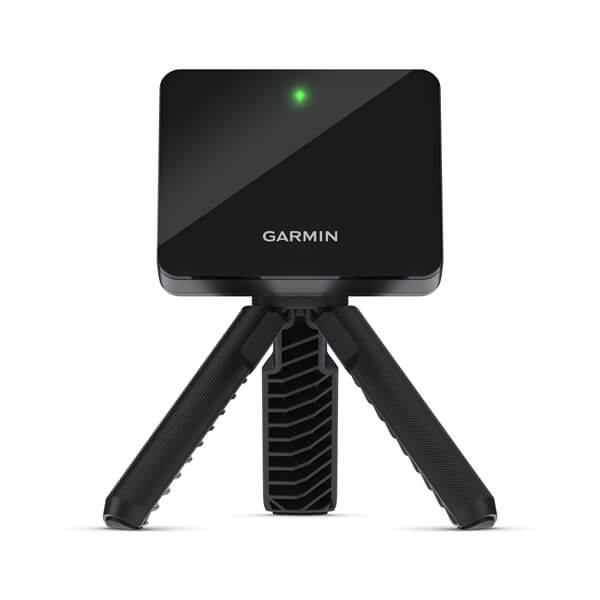
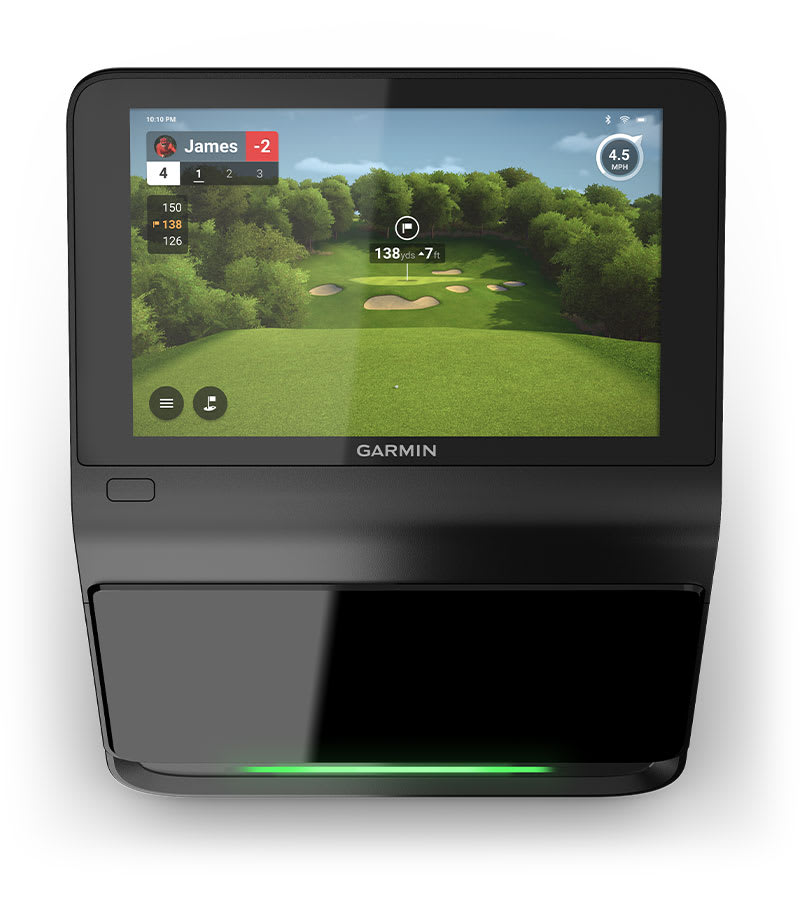
Same brand. Wildly different price tags. Completely different machines.
The Garmin Approach R10 costs $499. The Garmin Approach R50 costs $4,999. That’s not a typo. The R50 is ten times the price of the R10.
They’re both genuinely good launch monitors. Garmin didn’t make the R10 bad so the R50 would look better. They made two products for two completely different humans.
What that $4,400 premium actually buys.
The Technology Gap: Radar vs Camera
This is the biggest difference, and it explains almost everything else.
The R10 uses Doppler radar. It sits behind you, bounces radio waves off the ball as it flies, and calculates data from the ball’s flight path. It’s the same technology used in baseball radar guns, adapted for golf.
The R50 uses three high-speed cameras. It sits beside the ball (like a SkyTrak+ or Bushnell Launch Pro), takes rapid-fire photos of the moment of impact, and calculates everything from what it sees at the strike.
Why does this matter? Because camera-based systems are more accurate indoors. They don’t need ball flight to calculate spin — they see the ball compress and rotate off the clubface. Radar systems estimate spin from flight path, which works but introduces error, especially with wedges and short shots.
The R10 is good radar. The R50 is excellent camera tech. That’s the fundamental gap.
Data Depth: What Each One Measures
The price difference shows up in the data.
| Metric | Garmin R10 | Garmin R50 |
|---|---|---|
| Ball Speed | Yes | Yes |
| Launch Angle | Yes | Yes |
| Launch Direction | Yes | Yes |
| Carry Distance | Yes | Yes |
| Total Distance | Yes | Yes |
| Club Head Speed | Yes | Yes |
| Smash Factor | Yes | Yes |
| Spin Rate | Yes (estimated) | Yes (measured) |
| Spin Axis | Yes (estimated) | Yes (measured) |
| Club Path | Yes | Yes |
| Face Angle | Yes | Yes |
| Face-to-Path | Yes | Yes |
| Angle of Attack | No | Yes |
| Apex Height | No | Yes |
| Deviation Distance | No | Yes |
| Putting Data | No | Yes |
| Impact Videos | No | Yes |
The R50 measures spin directly. The R10 estimates it. The R50 has angle of attack. The R10 doesn’t. The R50 captures putting strokes. The R10 can’t.
For a casual golfer hitting into a net, the R10’s data is more than enough. For a low-handicap player dialed in their wedges, the R50’s measured spin and angle of attack are the difference between useful data and noise.
The Built-In Simulator: R50’s Killer Feature
This is where the R50 separates itself from everything else on the market — not just the R10.
The R50 has a 10-inch color touchscreen built into the unit. You don’t need a phone, tablet, or PC to play simulator golf. You turn it on, and you’re playing on one of 43,000+ preloaded courses through Home Tee Hero.
The R10 requires a phone or tablet running the Garmin Golf app. It works, but you’re staring at a phone screen. The R50 gives you a dedicated display that shows your shot data, impact videos, and course rendering all in one place.
Both units are compatible with E6 Connect and GSPro for full simulator play on a bigger screen. But only the R50 works as a standalone device with no external hardware.
For the guy who wants to hit balls in his garage without setting up a projector and PC every time, the R50 is the only launch monitor that does this. Turn it on. Hit. Done.
Space Requirements
This is where the R10 has a real advantage.
R10 (radar): Needs 6-8 feet behind the ball + 10-12 feet in front. Total room depth: ~21 feet. It’s the space hog of the Garmin lineup.
R50 (camera): Sits beside the ball. Needs 8-10 feet from ball to screen. Total room depth: ~12 feet minimum. Way more forgiving.
If you have a shallow garage or a tight basement, the R50 fits where the R10 simply can’t. The camera-based design eliminates the “behind the ball” space requirement that makes radar units so depth-hungry. Check our golf simulator space requirements guide for a full room-depth breakdown.
Portability
Both units are portable, but in different ways.
The R10 weighs practically nothing. It fits in a golf bag. You can take it to the range, set it up in 30 seconds, and track your shots outdoors. Battery-powered, Bluetooth-connected, done.
The R50 is bigger — 16.5“ × 10.6“ × 7.5“, weighing 9 lbs. It comes with a carrying case. It has a 4-hour battery life. It’s portable in the sense that you can move it from garage to range, but you’re not tossing it in your golf bag.
The R10 wins on grab-and-go portability. The R50 wins on self-contained functionality.
Price Context
Let’s be honest about what $4,999 buys in the broader launch monitor market.
At $4,999, the R50 competes with:
- Foresight GCQuad ($14,000+) — the gold standard, but 3x the price
- Uneekor EYE XO ($5,500) — overhead mount, excellent accuracy, requires PC
- Trackman iO (~$4,000 + subscription) — ceiling mount, pro-grade
The R50 is the only one in this tier with a built-in touchscreen, no PC requirement, and full portability. That’s its unique value proposition.
At $499, the R10 competes with:
- Rapsodo MLM2Pro ($699) — adds camera tracking for slightly better spin data
- Voice Caddie SC4 Pro ($599) — built-in display, E6 compatible
- Square Golf ($499) — new optical system, promising but unproven long-term
The R10 is the best value radar unit in this tier. It’s the gateway drug to sim golf — and I mean that as a compliment.
Who Should Buy the R10
You’re budget-conscious. You want real data without spending real money. You have the space (21 feet of depth). You’re okay using your phone as a display. You want something you can take to the range.
The R10 is the best $499 you can spend on golf technology. It’s not a compromise — it’s a legitimate launch monitor that happens to be incredibly affordable. Read our full Garmin R10 review for the deep dive.
Who Should Buy the R50
You want premium accuracy with measured (not estimated) spin. You want angle of attack data. You want putting capability. You want a built-in simulator that doesn’t require a PC or phone. You have $5,000 to spend and want the most self-contained system on the market.
The R50 is the best all-in-one launch monitor available. It’s not cheap, but it replaces a launch monitor + simulator PC + display in one device. If you factor in what you’d spend on a gaming PC and monitor separately, the $4,999 starts looking more reasonable.
The Verdict
These aren’t competitors. They’re two products for two humans.
The R10 is for the guy dipping his toes in. The guy who wants to know if he’ll actually use a simulator before dropping real money. The guy with a garage and a net and a phone. $499. Done.
The R50 is for the guy who’s all in. The guy who wants tour-level data, a built-in screen, and a device that works as both a home simulator and a range tool. $4,999. No compromises.
If you’re unsure which one you are, start with the R10. The worst case is you outgrow it and upgrade — and the R10 holds its value well enough that you’ll recover most of the $499. Best case, it’s all you ever needed.
Check Garmin R10 pricing → · Check Garmin R50 pricing →
FAQ
Is the R50 8x better than the R10? In raw accuracy and data depth, no — it’s maybe 2-3x better. But the built-in touchscreen, standalone simulator capability, and putting data add value the R10 simply can’t match. The “8x” framing is about features, not accuracy multiples.
Can the R10 measure spin accurately? It estimates spin from ball flight. For irons and woods, it’s within 3-5% of more expensive units. For wedges, it over-reads spin indoors. The R50 measures spin directly via cameras — more accurate across all clubs.
Do I need a subscription for either? The R10’s basic Garmin Golf app is free (driving range + data). E6 Connect and GSPro require separate subscriptions. The R50 requires a Garmin Golf membership ($14.99/month or $59.99/year) for Home Tee Hero simulator play.
Which one is better for a small room? The R50. Camera-based, sits beside the ball, needs ~12 feet of depth. The R10 needs ~21 feet of depth because of its radar placement behind the golfer. For tight spaces, see our best golf simulator for small room guide.
Can I putt with either? Only the R50. It tracks putting strokes. The R10 can’t track putts — it’s a radar unit designed for full swings.
Related: Garmin R10 Review | Garmin R50 Review | R10 vs Rapsodo MLM2Pro | Best Golf Simulator Under $5,000 | 5-Year Total Cost of Ownership
The R50 wins on accuracy, data depth, putting, and all-in-one simulator capability. The R10 wins on value and portability. They're not really competitors — they're for completely different buyers. For most people, the Garmin Approach R50 is the better choice.